
Are They Really “The One”? 15 Signs You’re with the Right Person
Are you with someone and wonder if you have found the right partner in love? Thinking of finding “the one” can feel uncertain, but it can be known by paying attention to patterns such as how you communicate, how you connect, and how you grow together.
A good relationship isn’t built on finding a perfect partner, but on emotional connection, shared effort, and compatibility. You don’t just find “the one,” but you build your relationship into something meaningful and choose someone who constantly chooses you. As time goes on, sharing a commitment can create a sense of emotional security that allows you and your partner to feel calm and happy in the relationship, instead of always questioning it.
What Does “The One” Really Mean?
There are many people who believe that there is one perfect person out in the world for them. Of course, lasting love isn’t about finding the perfect partner, but it’s about effort, emotional stability, and alignment.
You shouldn’t be looking for a partner that completes you, but one that complements who you are. This person should bring you balance, not confusion. Instead of constant highs and lows in the relationship, it should feel grounded, steady, and exciting. This kind of connection might feel calm at first, but it leads to real compatibility, not just fantasy.
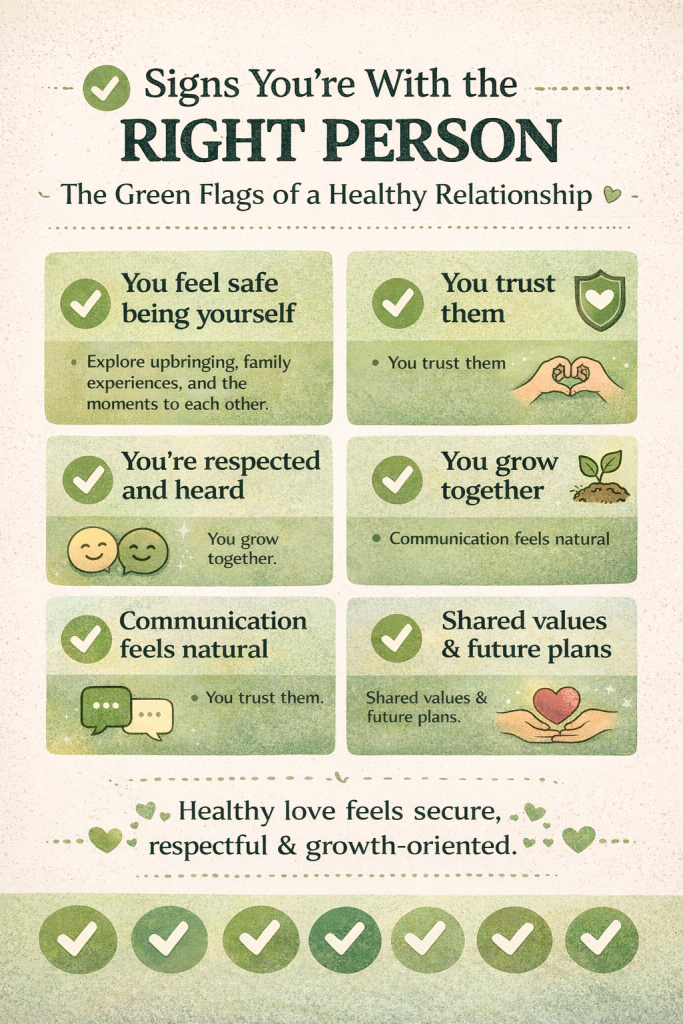
Is Finding “The One” a Choice?
When you find “the one,” it isn’t about finding a perfect person, but about creating a good relationship. This is the person you choose to be around repeatedly. This is the one you’ll turn to when you are stressed out or need support. This is someone who will stand beside you when life is challenging.
An initial attraction can be great, but a relationship is about repeated choices and mutual effort. One person cannot make the relationship strong; it takes both partners to invest in the connection.
Here are 15 signs that you’ve found “the one.”
1. It Just Feels Easy
Being with them doesn’t feel forced. You’re not trying to impress or be “on” all the time. You can just exist, and it feels calm and natural instead of stressful or overwhelming.
2. Silence Isn’t Weird
You don’t feel like you have to constantly talk. You can sit together, do your own thing, and still feel close. That kind of quiet comfort says a lot about how safe you feel with each other.
3. You Can Actually Talk About Things
You’re able to say what you’re thinking and feeling without holding back. Even when conversations are hard, you both show up, listen, and try to understand instead of shutting down.
4. You Feel Safe Opening Up
You’re not worried that your feelings will be dismissed or used against you. You can be vulnerable without feeling exposed, and that builds a deeper connection over time.
5. You Want the Same Things in Life
You don’t have to agree on everything, but the big things line up, such as what you want out of life, what matters to you, and where you’re going. That makes things feel more stable long-term.
6. Arguments Don’t Turn Ugly
You might disagree, but it doesn’t turn into disrespect. You work through things instead of trying to “win.” There’s still care and respect, even when emotions are high.
7. You Trust Them Without Overthinking
You’re not constantly questioning where they are or what they’re doing. There’s a steady feeling of trust instead of anxiety or doubt.
8. They Want You to Grow
They support your goals and want to see you do well. Even if it pushes you out of your comfort zone, they’re still in your corner.
9. You Feel Like Yourself, But Stronger
You don’t feel small or unsure around them. You feel more confident, more stable, and more like the version of yourself you actually want to be.
10. You Don’t Have to Hide Who You Are
You can be your real self, such as your habits, your personality, and even your flaws. You’re not trying to filter yourself just to keep the peace.
11. Time Apart Isn’t a Problem
You can have your own space and still feel connected. Being apart doesn’t create distance, but it actually helps the relationship stay healthy.
12. You Enjoy the Little Things Together
It’s not just about big moments. Even normal, everyday stuff like running errands or sitting at home feels better when you’re together.
13. You Respect Each Other’s Boundaries
You both understand each other’s limits and needs. Personal space and emotional boundaries aren’t seen as a threat, but they’re respected.
14. It Feels Peaceful, Not Draining
The relationship doesn’t leave you exhausted. There’s no constant chaos or emotional rollercoaster. It feels steady, calm, and supportive.
15. You Keep Choosing Each Other
It’s not just words, but it shows in actions. You both continue to show up, make an effort, and invest in the relationship every day.
Emotional Baseline Test
One way that you can evaluate your relationship is to check your emotional baseline. Ask yourself:
- Do I feel like myself?
- Do I feel supported?
- Do I feel judged?
- Am I anxious or calm around them?
As time goes on, your emotional baseline will show more than temporary feelings, and a good relationship will bring you peace instead of chaos.
Misconceptions About Finding “The One.”
Here are some misconceptions about finding “the one.”
Love Is Instant
Love shouldn’t be instant, but it should slowly grow through shared experience, emotional connection, and trust. Even though there can be instant attraction, it should evolve into something more meaningful as time goes on.
Doubts Mean Something is Wrong
Having doubts here and there is a normal thing, and it reflects thoughtful consideration instead of a lack of love. It’s important to recognize whether the doubt is temporary or if it’s a deeper, ongoing situation.
Getting Clarity in a Relationship
Here are some ways to gain clarity on your relationship:
Look at Daily Patterns
Look at how your relationship works each day, such as:
- How you handle stress together.
- Do you support each other?
- Do you feel respected and heard?
Daily behavior shows more truth than just a romantic gesture does.
Ask Trusted People
Ask people that you trust to see if they notice patterns that you might notice. Ask them things like:
- Do we seem to bring out the best in each other?
- Do we seem happy together?
Getting an outside perspective can give clarity, especially when you’re emotionally invested in the relationship.
Get Professional Guidance
Sometimes, a deeper reflection is needed to have clarity. Talk to a professional about your relationship so that it can show important insights that you might not have considered.
Healthy Patterns Vs. Red Flags
Here are some healthy patterns:
- Mutual effort in the relationship.
- Emotional safety.
- Respect.
Here are some red flags:
- Feeling worse about yourself.
- Emotional instability.
- Repeated disrespect.
Patterns matter more than just incidents.
Final Thoughts: Are They the One?
Finding the one isn’t about finding someone perfect but about finding someone who aligns with who you are, supports you, and wants to build a good life with you.
The best kind of relationship is one that’s supportive, studious, and real. This kind of relationship grows over time through trust, emotional connection, and effort. Love isn’t something you find one time; it’s something you build each and every day.
Frequently Asked Questions
1. How do you know if you are with the right person?
One of the clearest signs is how the relationship feels over time. If it feels steady, safe, respectful, and emotionally supportive instead of confusing or draining, that is often a strong indicator that you are with someone who is right for you.
2. Does being with the right person always feel exciting?
Not always in a dramatic way. Sometimes being with the right person feels more calm, natural, and grounded than intense. A healthy connection often brings peace, comfort, and stability rather than constant emotional highs and lows.
3. Is it normal to have doubts even in a good relationship?
Yes. Occasional doubts can happen even in healthy relationships. What matters is whether those doubts are temporary and thoughtful or whether they come from deeper patterns like repeated disrespect, instability, or emotional distress.
4. What are the most important signs of a healthy relationship?
Some of the strongest signs include trust, emotional safety, mutual effort, respect, healthy communication, shared values, and a sense that both people keep choosing each other through their actions.
5. Why does emotional safety matter so much in love?
Emotional safety allows you to be honest, vulnerable, and fully yourself without feeling judged, dismissed, or attacked. It helps both partners open up more deeply and creates a stronger long-term connection.
6. Can silence be a good sign in a relationship?
Yes. Comfortable silence can be a very healthy sign. It often shows that both people feel secure enough to be present together without pressure to constantly perform, entertain, or fill every moment with conversation.
7. How important is trust when deciding if someone is right for you?
Trust is essential. When trust is strong, you are not constantly overthinking, doubting, or feeling anxious about the relationship. A steady sense of trust usually makes love feel calmer and more secure.
8. Can the right person still challenge you?
Yes. The right person can encourage your growth, support your goals, and help you become stronger without making you feel small. Healthy love does not hold you back. It helps you grow while still feeling accepted.
9. Should you feel completely like yourself with the right person?
Yes. A strong relationship usually allows you to be real, open, and unfiltered in a healthy way. You should not feel like you have to hide major parts of your personality just to keep the peace.
10. What if arguments happen often?
Conflict itself is not the only issue. What matters more is how conflict is handled. In a healthy relationship, disagreements do not turn cruel or disrespectful. Both partners try to understand each other and work through problems rather than trying to win.
11. Do shared life goals matter in choosing the right person?
Yes. You do not have to agree on everything, but it helps greatly when your bigger values, direction, and hopes for the future line up. Shared long-term vision often creates more stability and less hidden tension.
12. Is feeling peaceful more important than feeling butterflies?
In many lasting relationships, peace matters more than constant butterflies. Excitement can be wonderful, but long-term compatibility often feels supportive, steady, and emotionally safe rather than chaotic or draining.
13. Can time apart be healthy in a strong relationship?
Yes. Healthy couples can spend time apart and still feel connected. Personal space does not have to threaten the bond. In many cases, it helps both people stay balanced and maintain a healthier relationship.
14. Why do daily patterns matter more than grand romantic gestures?
Daily patterns reveal how the relationship actually works. The way you handle stress, speak to each other, support one another, and show respect on ordinary days often says more than rare big gestures ever could.
15. What is the emotional baseline in a relationship?
Your emotional baseline is the overall way you tend to feel around your partner most of the time. If you generally feel calm, supported, and like yourself, that is very different from regularly feeling anxious, judged, or emotionally unstable.
16. What are some red flags that suggest someone may not be the right person?
Common warning signs include repeated disrespect, emotional instability, feeling worse about yourself over time, constant confusion, and patterns that leave you drained instead of supported.
17. Can the right relationship still require work?
Yes. Being with the right person does not mean the relationship is effortless all the time. It means both people are willing to keep showing up, communicating, and investing in the connection together.
18. Should outside perspectives ever matter when evaluating a relationship?
They can help, especially if they come from trusted people who care about your well-being. Sometimes an outside perspective can reveal patterns you miss when you are deeply emotionally involved.
19. When should someone consider professional guidance about a relationship?
Professional guidance can be helpful when patterns feel confusing, doubts will not settle, or the relationship keeps cycling through the same painful dynamics. A thoughtful outside perspective can bring clarity you may not see on your own.
20. What is the clearest overall sign that you are with the right person?
One of the clearest signs is that the relationship feels emotionally healthy over time. You feel supported, respected, calm, and able to be yourself, while both of you continue choosing the relationship through mutual effort and care.
Reading this reminded me that love is as much a cultivated capacity as it is an experience; the markers you list—trust, mutual growth, emotional safety—are precisely the scaffolding for durable partnership. When both people choose one another consistently, the relationship becomes a quiet force that enables flourishing over time. Truly insightful post.
This list feels really helpful and reassuring. It highlights small, everyday signs like comfortable silence and mutual respect that matter more than fireworks. I especially liked the emotional baseline test — practical questions to ask yourself when feelings are confusing. Great reminder that love is built, not found.
I appreciate how this piece distinguishes between fantasy and the ongoing work of love. Calmness, reciprocal respect, and shared goals are practical indicators, not just romantic clichés. Paying attention to daily patterns and emotional baseline is an excellent tip for anyone wanting clarity without overreacting. Thank you for such grounded advice.
What strikes me is the nuanced take that ‘the one’ is co-created through habitual, tender commitments rather than luck. Emotional security, aligned life aims, and the capacity for reparative dialogue paint a vivid portrait of compatibility. These insights encourage intentionality, which is exactly what healthy long-term love requires. ✨
The emphasis on mutual choice and sustained effort resonates strongly; it reframes ‘the one’ as an emergent property of joint cultivation rather than destiny. I value the attention to boundary-respect and growth support — those are often overlooked but essential to a resilient partnership. This article offers pragmatic rituals for assessing compatibility over time.
I loved this piece because it makes things simple. Being with someone should feel calm and let you be yourself. If you trust them and they support your goals, that’s huge. The list helped me know what to look for and made me feel hopeful about staying together.
Such a balanced perspective — I like that doubts are framed as normal rather than catastrophic. Checking daily patterns and asking trusted others for perspective are practical steps I can actually take. This post makes the process of evaluating a relationship feel less scary and more like thoughtful care.