
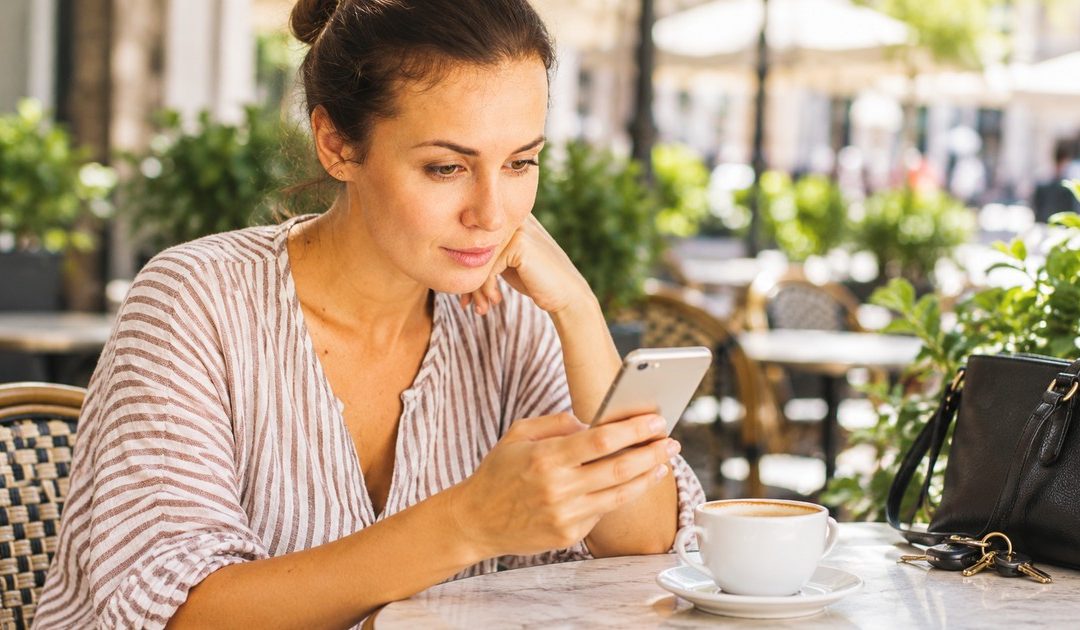
A useful online dating safety checklist protects your room to choose: what you share, when you meet, how you travel and when you leave. Plan a first meeting that is public, affordable and easy to end.
You do not need proof that someone is dangerous to decline a date. Precautions can reduce some risks, but responsibility for harmful behavior always belongs to the person who causes it.
Before you meet: four practical checks
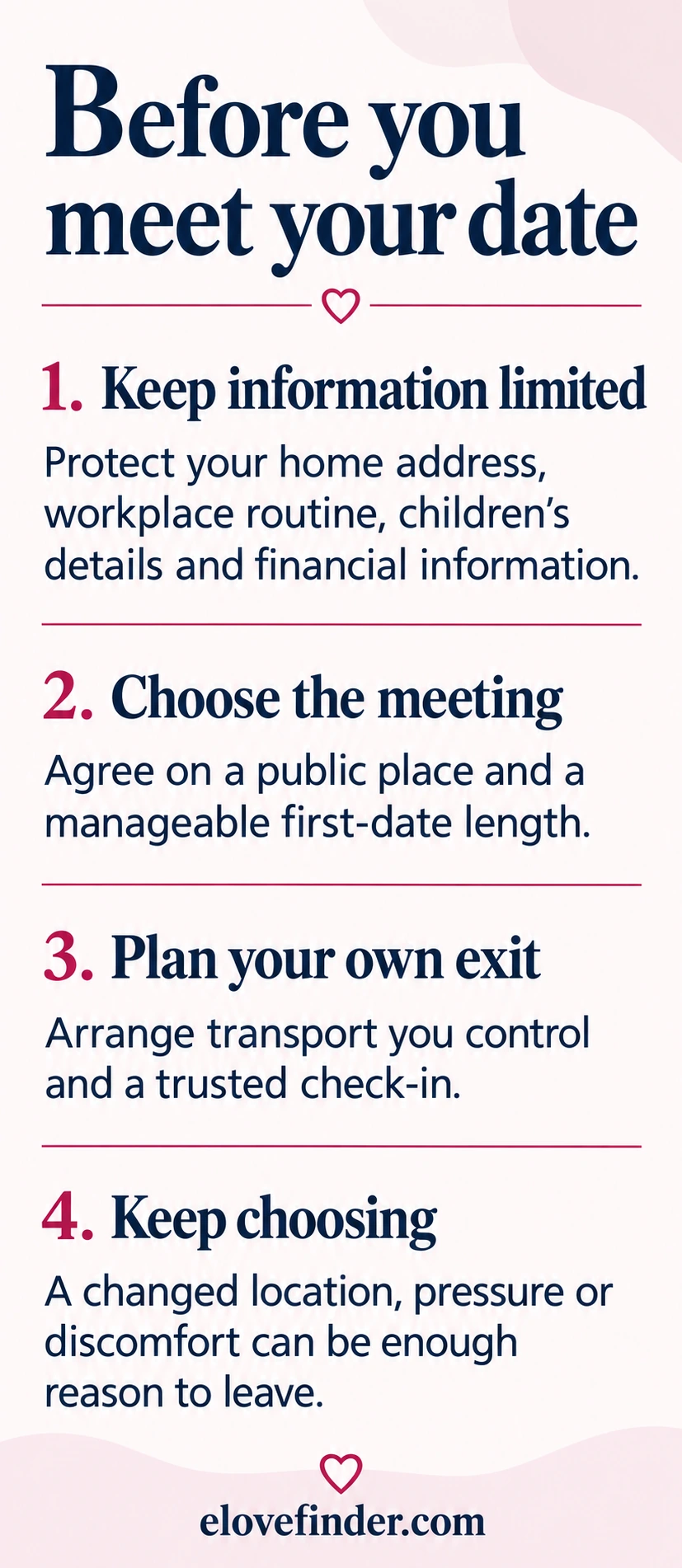
Read the guide as text
- Keep information limited. Protect your home address, workplace routine, children’s details and financial information.
- Choose the meeting. Agree on a public place and a manageable first-date length.
- Plan your own exit. Arrange transport you control and a trusted check-in.
- Keep choosing. A changed location, pressure or discomfort can be enough reason to leave.
Pay Attention to Behavior for Compatibility
Before you ever agree to go on a date, pay attention to how the person responds to your preferences. Can you suggest a different day without feeling insulted, and can you keep the conversation on the app without it being said that you have no trust? Do they accept that you have work, family, and other commitments?
If you get one strange message, it doesn't show someone's whole personality but always pay attention and look for patterns to understand what's really going on. If someone apologizes for a misunderstanding and acts differently, this is completely different from someone who keeps pushing past a clear boundary.
If plans always become urgent, always change, or questions about an ordinary day are acted upon offensively, you don't have to diagnose the reason. You can decide to end the interaction without having to explain yourself.
If you're talking to someone and you suggest having coffee on Friday, and the person you're trying to date insists on picking you up at your home that evening and says that you're difficult when you decline, this is pressure. It shouldn't matter whether he has an impressive profile or not.
Identity Checks for Information
If you see a consistent profile on social media or do a video call, it can help you be more familiar with someone. Of course, none of these things prove that the person is safe because images, accounts, and videos can be manipulated or misleading. Harmful behavior isn't limited to people who use false identities.
If a platform gives verification checks, find out what it verifies. A badge might relate to a photo or an identity check, but it isn't a criminal background check or a promise that they're going to act right in the future.
Don't turn your preparation into a big investigation. You don't have to look for their private records, contact their employer, or publish someone's information. If what you can confirm isn't enough for you to feel comfortable, then decide not to meet.
Keep your reason modest and decide if you want this kind of interaction to move forward. A first date is a chance to learn more about the person, not an award to give someone a pass to do what they want.
Sharing Just Enough Information
When you go on a date, you can talk about interests, values, and the kind of relationship you want without giving your address, your workplace, your daily routine, your child's school, or your child's care schedule.
Think about the pictures you post. If you post a school logo, house number, license plate, or something else that's identifiable, it can lead the person to you. Keep your child's images and their identifying details out of your dating profiles.
RAINN’s safer dating guidance includes ways to protect personal information and plan a first meeting. Use the parts that fit your circumstances rather than assuming an app's privacy settings make everything private.
You can tell them that you keep your address and your children's details private while you get to know someone. You don't have to apologize or give them a reason to go on a date. If the person feels disappointed, they still need to respect you.
Financial Requests and Dating
An online connection can feel meaningful before you meet. That feeling does not make a request for money, gift cards, cryptocurrency, travel costs or investment access trustworthy. Do not send money to someone you have only met online.
The Federal Trade Commission warns against sending money to an online love interest you have not met in person. Do not share banking passwords, verification codes, identification documents, or access to financial accounts.
A picture of a passport, a video call, or a good story doesn't remove a concern. It also doesn't promise to pay you back after your first date. If a request makes you feel concerned, take a break and talk to someone who's not in the conversation. Don't just send a small amount to see if the person's real.
If you have already paid them or gave them money, contact your financial provider right away and report the account through the platform. Being deceived doesn't mean that dating is wrong for you.
Pick a First Date That’s Easy to Leave
When you're meeting someone for the first time, it's a good idea to pick a place where you feel comfortable and can easily leave when you're ready. A busy coffee shop, restaurant, or another public place with employees around might be a better option than meeting at someone's house or going somewhere secluded. It's also helpful to have an idea of how long you want the date to last.
Think about things like transportation, your budget, and whether the location meets your personal needs. Just because somewhere is public doesn't automatically mean it's convenient or accessible. You might need to check parking, entrances, restrooms, seating, or how noisy the place usually gets.
There's nothing wrong with keeping a first date short. For example, meeting for coffee from two until three gives you plenty of time to talk without committing to an entire afternoon. You can enjoy getting to know someone without feeling pressured to spend more time together than you originally planned.
And remember, just because you're having a good time doesn't mean you have to extend the date. You can enjoy someone's company and still leave when you said you would. Taking things slowly doesn't mean you're not interested.
Make Sure You Have Your Own Way Home
When you're going on a first date, it's usually a good idea to have transportation that you can control. This might mean driving yourself, taking public transportation, calling a taxi, or arranging for someone you trust to pick you up. The important thing is making sure you're not completely dependent on someone you've just met to get you home.
Before leaving, think about how you'll get back, especially if you're using transportation that stops running at a certain time. You might also want to have some extra money available in case your plans change or you need another way home.
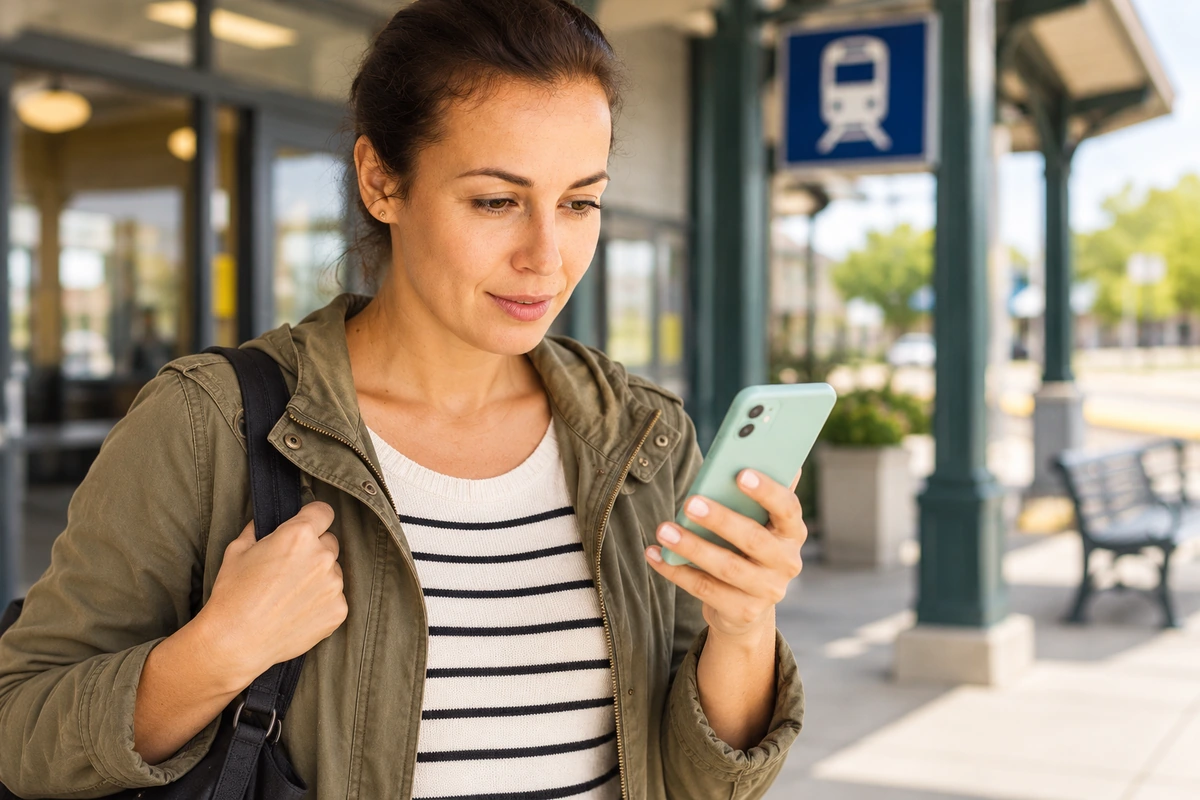
You also don't have to give someone your home address just because you've agreed to go on a date. If you need someone to drop you off or pick you up, consider meeting at a public location instead. If someone you already trust is helping with transportation, you can make arrangements that don't involve sharing your private information with your date.
For example, imagine that Ryan is planning a first date with someone he met online. She suggests a restaurant outside of town, but Ryan would rather meet at a coffee shop near two bus routes. He knows that getting home will be easier from that location. His decision doesn't mean he thinks she's untrustworthy. He's simply making plans that allow him to feel comfortable and leave whenever he needs to.
Let Someone You Trust Know Your Plans
Before meeting someone new, consider letting a trusted friend or family member know where you're going, who you're meeting, and approximately when you expect to be home. You don't have to share every detail about your dating life, but giving someone a little information can be helpful if something unexpected happens.
You might also want to arrange a quick check-in during or after the date. For example, you could tell a friend that you'll send them a message when you get home. Talk about what they should do if they don't hear from you. Maybe they should text first, try calling, or take another step you've agreed on. This way, they won't have to guess whether something is wrong.
Some people also feel more comfortable sharing their live location with someone they trust. This can be helpful, but it's completely optional. If you decide to use location sharing, make sure you understand who can see your location and how to turn it off afterward. Remember that sharing your location doesn't guarantee your safety, so it shouldn't replace other precautions.
If you don't have someone, you're comfortable sharing your plans with, there are still ways to make your first date safer. You might pick a familiar restaurant with employees around, keep the meeting short, and make sure you have reliable transportation.
The important thing is finding a plan that helps you feel comfortable without making dating seem scary or complicated. You deserve to enjoy meeting someone new while still taking reasonable steps to protect your privacy and safety.
Pack for Changes
Charge your phone and bring anything you need for your date, such as your glasses, medicine, a mobility aid, a power bank, or information you need to be able to go home safely. Keep these belongings with you.
You don't have to create an emergency kit, but the point is to make sure you can avoid small problems and not be dependent on someone you just met. Consider payments in advance. Pick a place that you can afford on your own if you need to. You might agree to split the cost, alternate the bills, or accept an offer, but paying doesn't mean that they have access to your time, body, or another date.
If alcohol is going to be part of the date, figure out what you're comfortable with and don't accept pressure to change that. Don't leave drinks unattended. If you suddenly feel unwell or believe that your drink was messed with, get help from staff, someone you trust, or emergency medical services.
Consent Vs. Being Friendly
Going on a date, flirting, traveling to a place, or enjoying a kiss doesn't mean that you're obligated to go further. You can change your mind, end the date, or decline any kind of physical contact that you don't want.
You don't have to explain yourself using elaborate words. You can just say, "I'm not comfortable with that." You don't have to use a perfect sentence to set boundaries. If the person keeps trying to force you into something, pay attention to their behavior. Repeated persuasion isn't a compliment, and you can stop explaining yourself and leave when you want to.
Consent also applies to pictures, social media posts, and sharing details about the date. Ask before you take or post pictures. Do not assume that another person's attendance means they're comfortable being shown on your account.
Changed Locations and Your Own Decisions
Going out for coffee can become a suggestion to visit your apartment, take a drive, or meet friends somewhere else. You're allowed to look at each change instead of treating the original yes agreement as a yes for the whole night.
Ask yourself if you understand the new plan, if you're able to leave on your own, and if you want to go. If you answer no to any of those, staying with the original date is reasonable. You can say something like, "I liked meeting you, and I'm going to just keep today as coffee day." Someone who is a good match for you will hear that without needing you to prove that you're interested.
If you show up at the place of your original date and it's unexpectedly closed, you can pick another public place that you're comfortable with, or you can reschedule the date. An inconvenience doesn't require that you accept a private alternative. You can be flexible but keep your boundaries and the conditions that matter to you.
Know When It's Time to Leave a Date
When you're meeting someone for the first time, it can help you to think about what you'll say when you're ready to leave. Sometimes something as simple as, "Thanks for meeting me, but I'm going to head home now," is enough. You don't have to wait until something goes wrong or come up with an excuse to end the date. If you're ready to leave, that's a good enough reason.
But if someone makes you feel uncomfortable or unsafe, don't worry about finding the perfect words. Your safety is more important than being polite. You can leave without giving a long explanation, and if you need help, consider speaking with an employee or someone nearby. You shouldn't have to convince your date that you have a good reason for wanting to leave.
It's also important to remember that you can't control how someone reacts when you tell them no. They might become upset, disappointed, or even angry, but that doesn't mean you've done anything wrong by ending the date. You can treat someone respectfully without feeling responsible for their reaction.
If something serious happens during the date, such as harassment, threats, or sexual assault, you have the right to seek help and support. This might involve medical care, talking with a sexual assault support service, or learning about your legal options. You don't have to decide whether to make a formal report before asking for help.
Think About How You Felt After the Date
Once you're home, take a little time to think about how the date went before deciding whether you'd like to see the person again. Instead of worrying about whether you said all the right things or made a good impression, focus on how you felt while spending time together.
Did you feel comfortable being yourself? Did the other person listen when you talked? Were your preferences and boundaries respected? Did you enjoy the conversation, or did you feel pressured to act a certain way? These questions can help you decide whether you're interested in getting to know the person better.
Remember that you don't have to be perfectly relaxed or know immediately whether someone is right for you. Sometimes a date can be enjoyable without leading to a romantic connection, and that's okay. You shouldn't feel obligated to continue dating someone just because they were nice or because the evening went well.
If you decide that you don't want another date, it's okay to be honest and keep your message simple. You might say, "Thanks for meeting up with me. I enjoyed talking with you, but I don't think we're the right match. I wish you the best." You don't have to explain every reason behind your decision or continue discussing it if the other person disagrees.
But if someone continues contacting you after you've made it clear that you're not interested, you can use blocking or reporting features to stop unwanted communication. If their behavior involves threats or stalking, consider saving important messages when it's safe and getting appropriate support. You don't have to keep responding just to collect more evidence.
The important thing is remembering that dating should give you an opportunity to meet new people without feeling pressured to continue something that doesn't feel right. You can appreciate the experience, trust your feelings, and decide what you want to do next.
Build a first-meeting checklist
Choose a few practical options to make a short checklist you can adapt before a first date.
These arrangements cannot guarantee another person’s behaviour. Pressure or discomfort can be enough reason to leave.
Use the questions and examples in the article above; the draft builder needs JavaScript.
15 questions readers ask
1. How long should I chat before meeting?
There is no required waiting period. Meet only when you feel ready and have a workable plan. Pressure to hurry is a reason to slow down or decline.
2. Does a verified profile prove someone is safe?
No. Identity checks may provide limited information, but they do not establish intentions or guarantee behavior. Keep ordinary precautions and notice how the person responds to limits.
3. Where is a suitable first meeting?
Choose a populated public place where you can leave independently. Avoid last-minute pressure to switch to a home, isolated area or location that does not suit you.
4. Should my date collect me from home?
Arrange transport you control for an initial meeting. Keeping your address private and planning your own journey can make leaving easier.
5. What should a trusted person know?
Share the meeting place, who you expect to meet and a check-in arrangement you both understand. Choose communication that fits your privacy and access needs.
6. Do I have to share my location?
No. Consider what is useful and comfortable for you. A check-in can work without continuous tracking, and sharing location does not guarantee safety.
7. What personal information should I limit?
Be cautious about addresses, routines, workplaces, children’s details, financial information and photos that reveal locations. You can share more gradually if you choose.
8. What if an online match asks for money?
Do not send money or financial information to someone you have only met online. Stop and check the situation with a trusted person; report suspicious requests.
9. Is a video call a guarantee of identity?
No. It can provide context, but manipulated media and misleading accounts exist. No single call, image search or badge can prove someone’s intentions.
10. Can I change my mind after agreeing to a date?
Yes. You can cancel, suggest another plan or leave early. Agreement to meet does not create an obligation to continue the date or become intimate.
11. What if the person changes the venue at the last moment?
Reassess the new plan. You can keep the original arrangement, suggest a public alternative or decline if the change feels uncomfortable or impractical.
12. Does being friendly imply sexual consent?
No. Flirting, accepting a drink or meeting in person does not establish consent to sexual activity. Each person must remain free to decline or stop.
13. What if I feel uncomfortable during the meeting?
You can leave without waiting for proof of danger or a polite ending. Seek help from staff, a trusted person or local emergency services if needed.
14. What should I consider after the date?
Notice how you felt and whether your preferences and boundaries were respected. You do not need a second meeting simply because the person wants one.
15. Is harm my fault if I missed a precaution?
No. A checklist is a planning aid, not a test of deserving safety. Responsibility remains with the person who harms or deceives someone.