

The first month of dating is a time to discover what you enjoy together and what each person wants. It does not need to follow a fixed timetable, and an awkward conversation or a difference in preferences does not automatically mean you have ruined the relationship.
Focus on choices that help you get to know each other honestly. These include agreeing on the pace, keeping room for your own life and asking questions instead of relying on assumptions.
On this page
Choose a pace that works for both people
Attraction and physical intimacy can be important, but neither tells you what the other person wants from dating. Talk about what you are comfortable with and leave room for either person to change their mind.
You do not owe sex, affection or exclusivity because you have been seeing someone for a certain number of weeks. If exclusivity matters, ask about it directly. A good date or frequent messages do not establish an agreement on their own.
Try, “I am enjoying this and would like to know whether we are dating other people.” An answer you do not prefer can still give you useful information for your next choice.
Show your preferences without performing
You do not need to reveal everything immediately, but you can stop trying to be agreeable about every small choice. Suggest a place you actually like, explain a scheduling limit or say that an activity is not for you.
Being yourself does not mean abandoning consideration. You can be honest and kind: “I would like to see you, but a late evening will not work this week. Would Saturday afternoon suit you?” Notice whether there is room for both people’s preferences.

Keep the rest of your life in view
A new relationship can take up a lot of attention. Keep some time for friends, rest, responsibilities and interests that matter to you. You do not have to put everything else on hold to show that you are interested.
If plans keep shifting, decide what you can reasonably offer. “I can meet on Friday if we confirm by Thursday” is clearer than keeping every evening free. Avoid using absence as a tactic to make someone chase you; communicate the actual limit.
Discuss contact and reassurance
Wanting connection does not make you too needy to date. At the same time, a new partner cannot always be available when you want reassurance. Discuss what each of you finds comfortable around messaging and time together.
Rather than guessing what a delayed reply means, consider the information you have. You can ask about contact preferences without demanding constant updates or access to someone’s location. Keep other sources of support in your life too.
If your needs differ, that may be a compatibility issue to consider. It is not a reason to shame either person or monitor them more closely.
Respect privacy and explain boundaries
Curiosity about a partner’s past does not create a right to read their messages, search their belongings or demand intimate details. Share what you choose and ask questions respectfully. A private detail can remain private without being a lie.
Explain limits when you can, and respect a refusal even if you did not anticipate it. People remain responsible for how they treat you; failing to state a boundary in advance does not make harmful behaviour your fault. The love is respect guide to boundaries and expectations can help you frame a conversation about limits.
Be honest and notice how differences are handled
Be clear about information that affects the agreement, such as whether you are dating others or looking for a casual arrangement. If you have misled someone, acknowledge it and correct the information without demanding that they continue dating you.
You can disagree about an opinion, a plan or the future. Notice whether either person can say no without punishment, ridicule or pressure. You do not have to agree with everything to keep someone’s interest.
Take threats, controlling behaviour or repeated disregard for your choices seriously. You can slow down, seek support or end contact. A first month is an opportunity to learn about the relationship, not a deadline by which you must make it work.
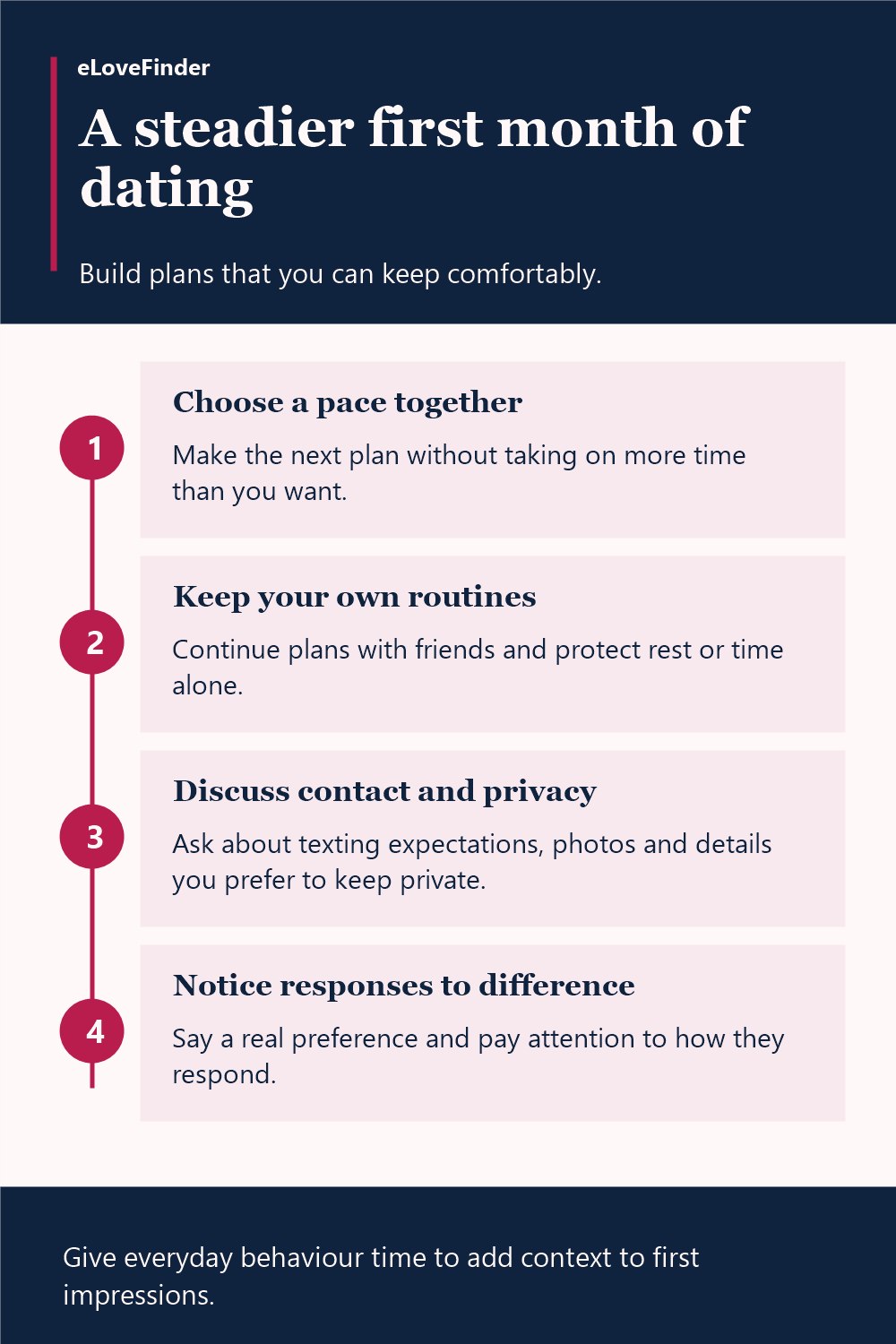
Read the infographic in text
A steadier first month of dating Build plans that you can keep comfortably.
- Choose a pace together Make the next plan without taking on more time than you want.
- Keep your own routines Continue plans with friends and protect rest or time alone.
- Discuss contact and privacy Ask about texting expectations, photos and details you prefer to keep private.
- Notice responses to difference Say a real preference and pay attention to how they respond.
Give everyday behaviour time to add context to first impressions.
‘Forget your ex’? Oh please! We all bring our past into new relationships; that’s just how humans work. This article oversimplifies how people process their emotions and memories when starting anew.
Great advice on setting boundaries! Many people overlook this aspect, thinking love conquers all. It’s important to establish what you are comfortable with from the get-go. Knowing your limits can really enhance a relationship.
I absolutely loved this article! It really captures the essence of relationships post-honeymoon phase. The emphasis on communication and honesty is spot on. These insights can truly help many couples strengthen their bond. ❤️
This article provides some good reminders about what can go wrong in new relationships. It’s essential to establish boundaries and ensure open communication. Avoiding comparisons with exes is crucial for growth!
I find this perspective quite narrow. Relationships are inherently complex and can’t be boiled down to a few basic guidelines. What works for one couple may not work for another, so let’s not oversimplify it.
‘Don’t focus too much on looks’? Well, that’s rich coming from someone who’s probably never had their looks questioned! Physical attraction matters; let’s not pretend it doesn’t play a role in relationships.
Honestly, who writes this stuff? Comparing a new partner to an ex is common sense! Plus, setting boundaries seems like a lot of unnecessary drama. Can’t we just enjoy being with someone without all these rules?
‘Red flags’? More like colorful banners! If we all started ignoring those obvious signs, we’d end up in relationships that are ticking time bombs waiting to explode! Pay attention, people!
While I appreciate the effort, this article seems overly simplistic. Relationships are complex and cannot be reduced to just a list of do’s and don’ts. Life experience teaches us that every relationship is unique.
I can’t believe this article suggests ignoring red flags! If you see something concerning, address it right away instead of hoping it’ll go away on its own. This perspective is dangerous and misleading!
Why does every relationship article make it sound like rocket science? Just talk to each other like normal human beings! Sometimes it’s as simple as sharing snacks while watching Netflix together.
“Ignoring red flags”? That’s not just bad advice; it’s downright irresponsible! Please take a moment to acknowledge that sometimes our instincts are right—if something feels off, it probably is!